
Credica provides specialised credit control software that works alongside your existing ERP, accounting and Accounts Receivable (AR) systems, helping businesses improve debt collection without replacing their current finance platforms.
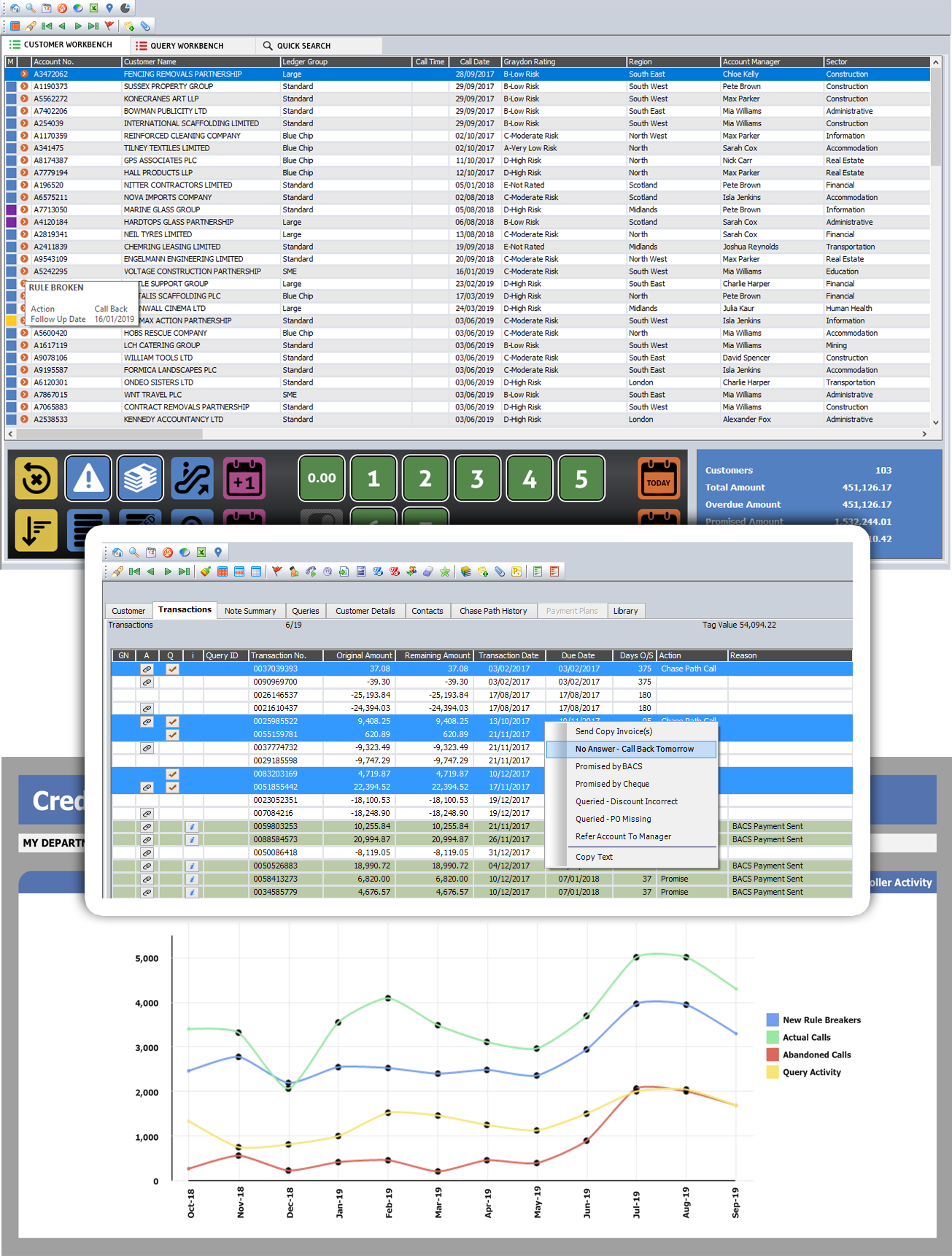
Our software brings relevant financial information into a dedicated credit control environment, giving your team the tools to automate collections, manage overdue accounts, track payment queries and monitor performance.
How Does Credica Work With Your Existing Finance Systems?
Credica receives customer and ledger information from your ERP or accounting system and makes it available within a dedicated credit control environment.
Your existing finance platform continues to manage your financial records, while Credica provides additional functionality for managing customer debt and collection activity.
Relevant information can support:
- Automated collections: Send payment reminders, statements and invoice correspondence according to your collection rules.
- Account prioritisation: Identify overdue customers and activities requiring attention through configurable worklists.
- Customer management: Access payment history, previous correspondence, promises to pay and scheduled follow-ups.
- Query management: Record and monitor disputes or payment issues affecting outstanding invoices.
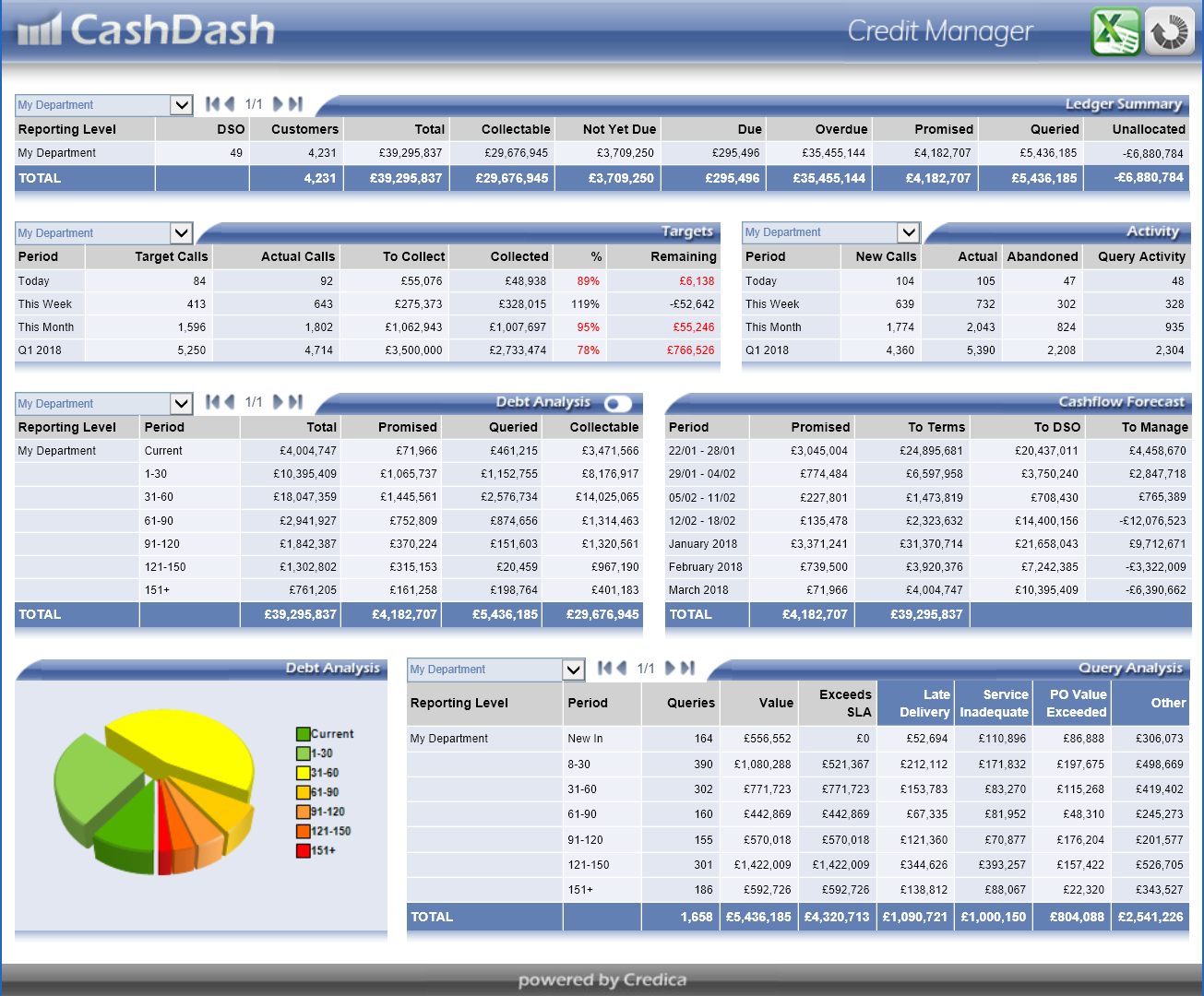
- Reporting and analysis: Review aged debt, collection performance and customer payment behaviour.
Credica can also incorporate information from additional sources, including Salesforce, Excel and CSV files, where required.
Which ERP and Accounting Systems Does Credica Work With?
Credica works with a wide range of ERP, accounting and Accounts Receivable platforms, from Sage and Xero to SAP, Oracle Financials and Epicor.
Our software can receive information from the following systems:
- SAP
- Oracle Financials (Oracle EBS and Oracle Fusion)
- Workday
- JD Edwards
- Microsoft Dynamics 365 Business Central
- Coda
- Baan
- Sage (Sage 50, Sage 200 and Sage Intacct)
- Microsoft Dynamics
- Epicor
- QuickBooks
- Xero
- Agresso
- Practice Engine
- PeopleSoft
The integration arrangements depend on your existing software, configuration and the information required by your credit control team. Our team works with you to establish the appropriate approach for your Finance environment.
Popular Finance Systems We Work With

Sage Credit Control Software
Credica works alongside Sage 50, Sage 200 and Sage Intacct, using relevant customer and ledger information to support more effective credit control processes.
Credica provides additional functionality for automated payment reminders, configurable chasing strategies, customer follow-ups, dispute management and reporting. Your existing Sage system remains in place, while Credica provides a dedicated environment for managing outstanding debt and collection activity.

Epicor Credit Control Software
Credica works alongside Epicor, bringing relevant customer and ledger information into a specialist Credit Control environment.
Credica provides configurable worklists, automated collections, promises to pay, query management and reporting to help teams manage overdue accounts more effectively.
Businesses can continue using Epicor as their existing ERP system while introducing dedicated credit control functionality through Credica.

What Can Credica Add to Your Existing Finance Software?
- More Effective Cash Collection: Automate routine chasing, configure different collection strategies and prioritise overdue accounts through focused worklists.
- Better Management of Payment Queries: Keep outstanding invoice disputes and customer queries visible alongside collection activity.
- Greater Visibility of Outstanding Debt: Access reporting on aged debt, customer payment behaviour, collection activity and outstanding queries.

Manage Growing Invoice Volumes Without Volume-Based Pricing
When choosing credit control software, it is important to understand how pricing changes as your business grows.
Credica’s pricing is based on the number of licensed users, rather than invoice volume, customer numbers or company size.
This means your business can benefit from:
- No invoice-based charges: Increasing monthly invoice volumes does not automatically increase licensing costs.
- No customer-volume charges: Your debtor ledger can grow without additional customer-based fees.
- Predictable licensing: Pricing is linked to the number of licensed users accessing Credica.
- Scalable collection processes: Automation and configurable workflows help teams manage increasing workloads.
This makes Credica particularly relevant for organisations with growing customer bases, high transaction volumes or increasing credit control demands.
How Does Integration and Implementation Work?
Every organisation has different finance systems, data requirements and collection processes.
Our team works with you to understand your existing environment and establish how Credica should receive and use your financial information.
Implementation typically involves:
- Reviewing your existing ERP, accounting and Accounts Receivable systems.
- Identifying the customer and ledger information required.
- Establishing the appropriate data transfer arrangements.
- Configuring Credica’s collection rules, workflows and reporting.
- Preparing the system for your credit control team.
A typical Credica implementation takes approximately two to three months, depending on your requirements.
Improve Credit Control Without Replacing Your Finance Systems
Credica helps your credit control team use that information to manage collections, reduce manual administration and improve visibility of outstanding debt.
Tell us which ERP or accounting systems you use, how many credit controllers need access and what you want to improve. Our team will explain how Credica could work alongside your existing systems and support your collection processes.
Frequently Asked Questions About ERP and Accounting Integrations
Credica is designed to support businesses managing large or growing invoice volumes. Its pricing is not based on the number of invoices processed, so increasing monthly invoice volumes does not automatically increase licensing costs.
Credica’s pricing is based on the number of licensed users accessing the system, rather than invoice volumes, customer numbers or company size.
This means that increasing your customer base, processing more invoices or expanding through acquisitions does not automatically increase licensing costs. Charges only increase when additional Credit Controllers require licensed access.
No. Credica works alongside your existing finance platform, providing specialist credit control functionality using relevant financial and customer information.
Yes. Credica can incorporate information from multiple sources, including ERP systems and Excel or CSV files, where appropriate. The integration arrangements depend on your organisation’s requirements.
Yes. Credica works alongside Sage 50, Sage 200 and Sage Intacct, receiving relevant customer and ledger information to support automated chasing, account prioritisation, query management and reporting.
Yes. Credica can work alongside Epicor, using relevant financial and customer information within its Credit Control system.
What Our Clients Say
Credica has enabled Stannah’s Credit Management team to deal with increased sales without increasing headcount
 Jayne Lee
Credit Manager - Stannah
The flexibility and configurability of our Credica system lets us tailor our approach to the needs of each customer group
Jayne Lee
Credit Manager - StannahProven Efficiencies
Revenue has increased 87% during their first 10+ years using Credica, yet their Credit Control headcount has reduced within that period
Achieved for the first time ever, a consolidated view of their entire ledger, incorporating 7 different back end systems into Credica